 Wills & Wills LP
This is a beautifully located unique 10 acres fronting the south side of Poplar Avenue and the north side of Poplar Pike, in Germantown, adjoining Memphis on the north and south. It is of cultural and historical significance, depicting historical changes of businesses, lifestyles, and transportation. Originally on an Indian foot trail (trace) and hunting ground, it is now on two of the most prominent streets and railway in the most sophisticated central business area of the Shelby County Metro Area. It is extremely well situated for upscale corporate offices, fine meeting and dining, and or a fine inn.
Please note: The historic Kirby Farm House has been moved to 6967 Messick Road, Memphis, Tennessee.
Kirby Farm House — Germantown, Tennessee
While the history of the Kirby Farm closely parallels that of Germantown, local authority (in the form of the office of the Justice of the Peace, the post office, and the polling place for Civil District II) was first established on the Kirby Farm site in the home of Eppy White. The change in location of local authority to Germantown did not occur until 1837, when White moved from the area to his new home at White Station.
Wilks Brooks purchased the Kirby Farm tract from Eppy White in 1837 and held it until the time of his death in 1849. The Brooks family lived near the present intersection of Kirby Road and Old Poplar Pike and maintained close social and economic ties to daily life in Germantown.
A Place in Prehistory
This home is the headquarters of a self-sufficient plantation estate that has survived for more than one hundred and fifty years. It is located on Old Poplar Pike that closely follows the long-forgotten Cherokee Trail that ran from points deep within the states of Mississippi and Alabama to the Mississippi River near the Desoto Indian Mounds beside the Old Frisco Bridge. Potsherds and arrowheads found on the grounds of the Nelson-Kirby House indicate that the high ground on which the house stands was favored by prehistoric peoples as a camp site along the trail. It is hoped that future archeological surveys of the grounds will reveal a much clearer picture of the levels of prehistoric activity in this area.
The Development of an American Heritage
The role of Shelby County as an outpost on the leading edge of the American frontier began soon after the surrender of the area by the Spanish under Pinckney's Treaty (1795) and the French under the Louisiana Purchase of 1803. While most of the new American settlements that followed were concentrated along the Mississippi River at Memphis and Randolph, other patterns of settlement spread east along the old Indian trails. These trails, or traces, were used by the early settlers as roads and became the major transportation routes for the area in the decades that followed. Many of our existing highways still follow the old traces.
The old Cherokee Trace, known today as Poplar Pike, has had previous names of: Alabama Road (as it was the road to Alabama); State Line Road (as it was the easiest way to get to the Mississippi–Tennessee state line because of the natural barrier of Nonconnah Creek); and Germantown to Memphis Plank Road, a toll road built to parallel the newly completed Memphis and Charleston Railway, which straightened out the turns of the original old Cherokee Trail that had caused the road to traverse lower-lying, poorly drained areas.
Tolls for passage along the Germantown Plank Road were set by an Act of the Tennessee Legislature in 1848:
| Passage | Toll |
|---|---|
| For every 20 head of sheep | five cents |
| For every 20 head of hogs | five cents |
| For every 20 head of cattle | ten cents |
| For every 3 horses or mules | five cents |
| For less than above | free |
| For every pleasure carriage drawn by 1 horse or other animal | ten cents |
| For every pleasure carriage drawn by 2 horses or other animals | fifteen cents |
| For every pleasure carriage drawn by 4 or more horses or other animals | twenty cents |
| For every loaded wagon drawn by 1 or 2 horses or other animals | ten cents |
| For every loaded cart | five cents |
| For every man & horse, or mule | five cents |
| For every loaded empty wagon, drawn by 1 or 2 horses or other animals | five cents |
| For every loaded wagon drawn by 3 or 4 horses or other animals | fifteen cents |
| For every loaded wagon drawn by 5 or more horses or other animals | twenty cents |
| For every empty wagon drawn by 3 or more horses or other animals | ten cents |
As Shelby County grew in the years after Memphis was settled, this property gained in value because of the early owners of this land. Eppy White (died 1857) in 1834 occupied the first permanent homestead on the site. By this time White received a Tennessee Land Grant so as to have title to this land and thereby be able to transfer the property by sale to a new owner. The area adjoining the east line of the property was already active from the development of the ill-fated experimental utopian colony of Neshoba, established by Francis Wright (1795–1852) in 1826. White's home was the scene of much local activity: he was the Justice of the Peace, his home served as the first polling place for District 11, and the first post office (then known as Pea Ridge). White sold his land in 1838 on the Alabama Road, as it was then known, and bought a larger tract to the west to be at the end of the rail that would later be known as White's Station.
The next owner was Wilks Brooks (1785–1849), a planter from North Carolina. Brooks gave the property for the Germantown Baptist Church in 1841—the only other building in Germantown listed on the National Register of Historic Places. After Brooks' death, the Memphis and Charleston Railroad opened for regular service from Memphis to Germantown in 1852, and his son Joseph Brooks (1819–1897) sold the property in 1853. Ownership changed hands nine times till 1869. The Kirby House was developed to its current size in about 1869–1870 through the work of Thomas A. Nelson (1819–1887) and later “Victorianized” by John Louis Ebling (1852–1920) in 1890–1891.
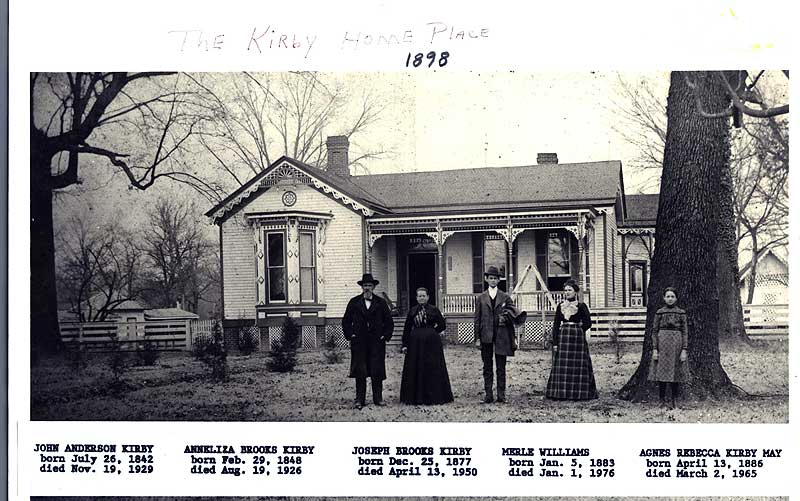
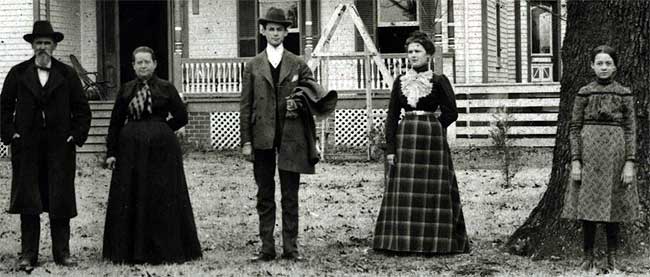
Nelson, a major industrialist, banker, and cotton broker in Memphis, moved his family here as a refuge after the first outbreak of the Yellow Fever epidemics that plagued the Mid-South during the late 1860s and 1870s. The Nelsons later transferred the property to their daughter, Laura, and her husband James Brett, who lived here until 1890. The Ebling family acquired the property from the Bretts and set about remodeling the house in the style of the Queen Anne Revival, its appearance today. In 1898, the property was purchased by John A. Kirby (1842–1929) and has remained in the hands of his descendants since that time. A native of Virginia, John Kirby moved to Memphis in 1860 and, following the outbreak of the Civil War, served with the Shelby Grays. After the war, Kirby married Ann Eliza Brooks (1848–1926), granddaughter of Wilks Brooks who owned the property from 1838–1853. By the turn of the century Kirby landholdings exceeded some 8,000 acres in Tennessee, Mississippi, and Arkansas. The Kirby House served as the headquarters for these land interests ever since. In 1926, John A. Kirby transferred the Kirby Home to his son, Joseph Brooks Kirby (1877–1950), who continued the family tradition of plantation agriculture.
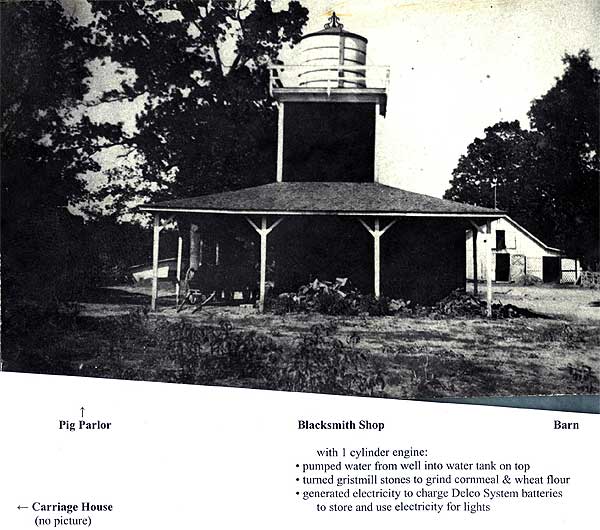
Blacksmith Shop
The historic blacksmith shop on the Kirby Farm supported the estate’s daily operations and reflects the agricultural heritage of the property.
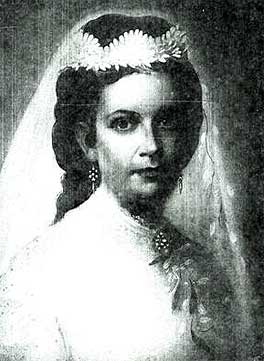
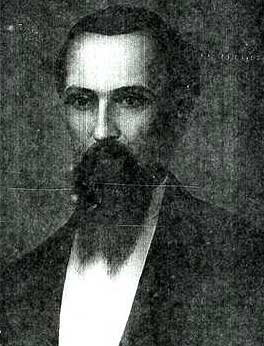
Kirby Family
Portraits and family photographs from the Kirby and Brooks lines.
Transportation Routes
The property lies along routes that follow older traces—including the path of the historic Indian trail that became Poplar Pike and related corridors.
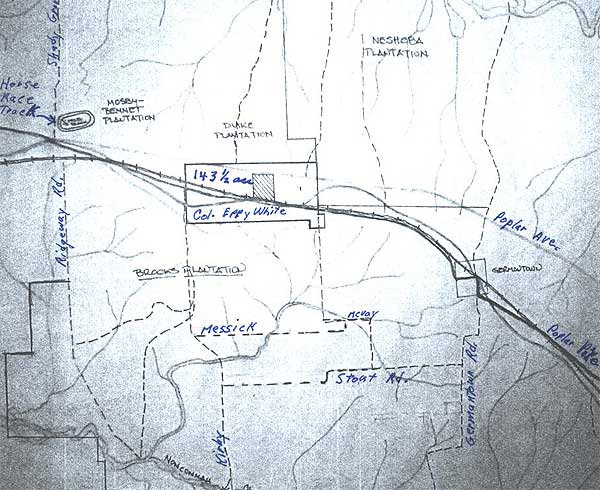
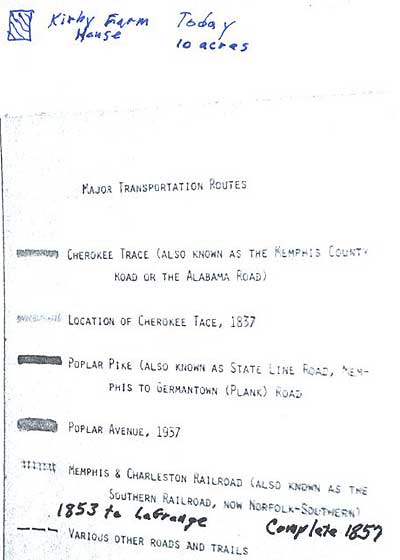
Photo Gallery
A larger photo gallery appeared on the original site; those pages are no longer available. Additional images may be added here as local files under images/kirby-farm-house/.
Map & Aerial View
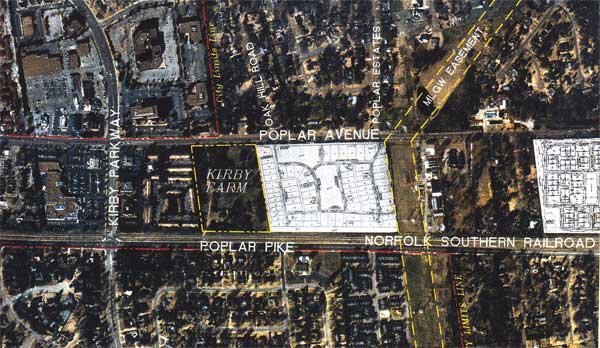
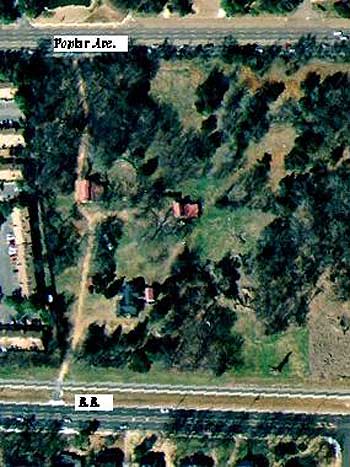
Current location (after move): 6967 Messick Road, Memphis, Tennessee.
Open in Google Maps (external).
Interested in Kirby Farm House? Contact us for more information.